

Documents
Recordings, videos and spoken notes need to become readable, formatted documents — without manual transcription and typing.
Our working solutions: Local transcription of large audio files, YouTube → text in Telegram
Practical AI engineering
ASP Lab develops solutions that automate systems and processes with AI, n8n and API integrations: documents, requests, voice, assistants, integrations and testing. We start with one concrete task and build a working solution around it.
For small and medium-sized businesses, education and public institutions.
Pick the direction closest to your process. Each one is backed by solutions we have built.
First we determine whether AI is actually useful for the task. Then we build a working solution for it, test it, measure the result, and only after that decide what architecture and deployment model make sense.
Recordings, videos and spoken notes need to become readable, formatted documents — without manual transcription and typing.
Our working solutions: Local transcription of large audio files, YouTube → text in Telegram
Requests arrive from the website and messengers, and people sort them by hand and forward them to the right colleagues.
Our working solutions: Electronic Telegram secretary, Feedback form with automatic routing
Voice messages and recordings have to be listened to, transcribed and moved into the right systems by hand.
Our working solutions: Local transcription of large audio files, AI dictation in Telegram
Routine actions — planning, time tracking, processing texts — take time and require switching between apps.
Our working solutions: Calendar AI & Chronos, YouTube → text in Telegram
Employees and customers keep asking the same questions, while the answers are scattered across documents.
Our working solutions: Electronic Telegram secretary, OpenAI API Desk
Data is moved between systems by hand, reports are compiled manually, and moving to another tool takes weeks.
Our working solutions: AI bug summary from Jira to Google Sheets, Migrating tasks from Jira to GitHub Projects
Manual testing and checking answers do not scale, and bugs take long to describe and move between tools.
Our working solutions: QA LLM Lab, Automated testing of Telegram bots
Choosing a model and judging an AI solution by the impression of a few answers is unreliable.
Our working solutions: Auto LLM Benchmark, QA LLM Lab
Example
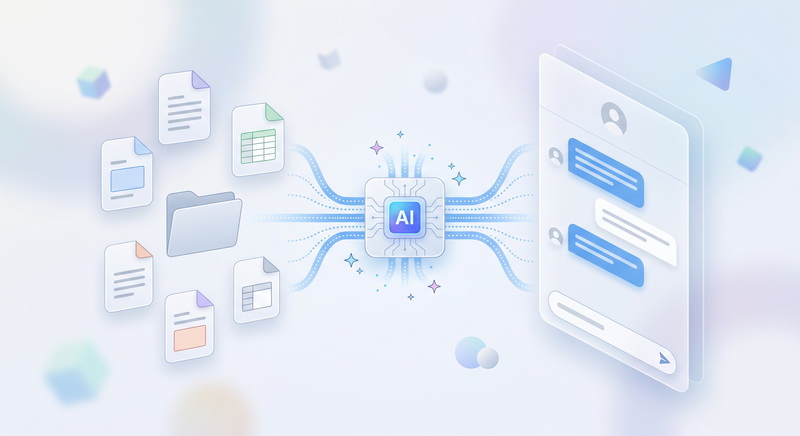
An employee asks which documents regulate the business-travel procedure; the system retrieves the relevant instructions and answers with references to them.
Details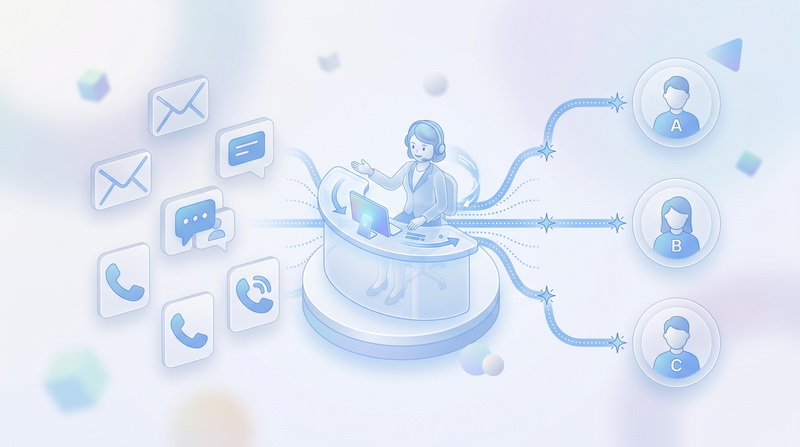
Example
A request written in free text reaches the right specialist with its topic and urgency already filled in.
Details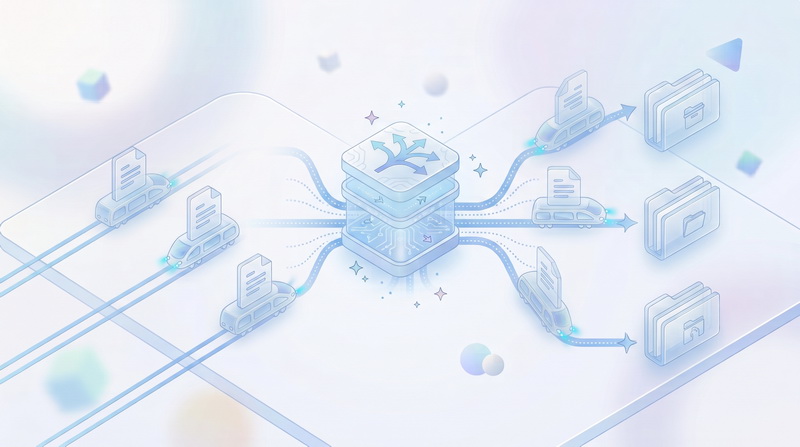
Example
A complaint arrives by email; it is classified, its key details are extracted and a review task is created for the responsible department.
Details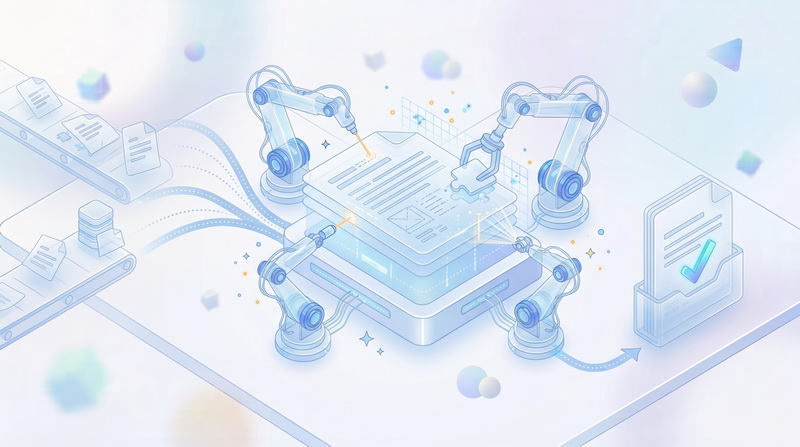
Example
A draft reply to an incoming request is prepared from the request and approved reference material.
Details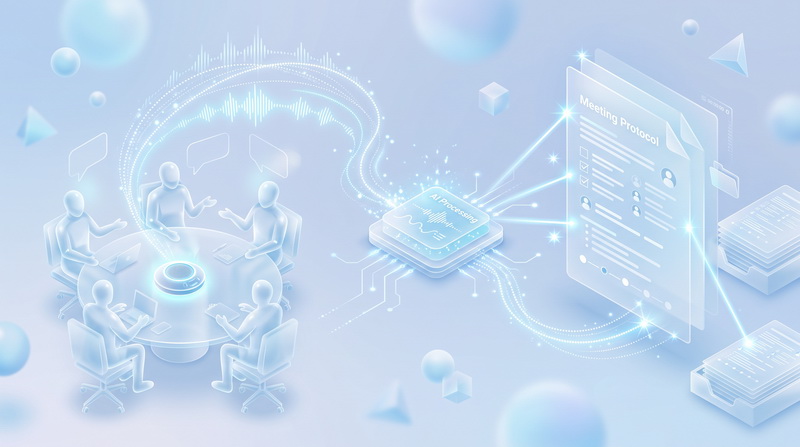
Example
After a meeting, a draft protocol lists decisions, owners and deadlines for the chair to confirm.
Details
Example
“Prepare the report by Friday, Ivan is responsible” becomes a structured task with an owner and a deadline.
Details
Example
A report shows which question is asked most often and which department's requests wait longest.
Details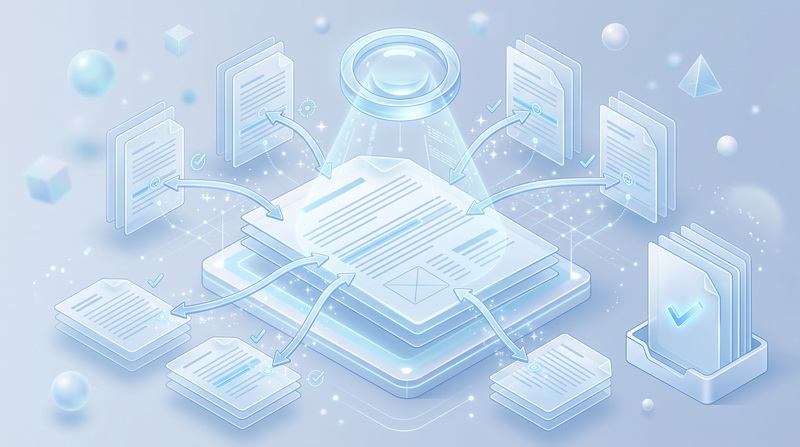
Example
A document states one deadline while an attached document states another; the system flags the discrepancy for a person.
DetailsAI solutions and automations we built — from Telegram assistants to migration, testing and integration tools.
Processing data locally may be worth considering when data sensitivity, connectivity or cost make external APIs a poor fit. Where processing should happen depends on the task and the data.
Local execution alone does not make a whole workflow private. Telegram, Google services and external AI APIs remain external components.
Possible applications, not descriptions of completed deployments for these organizations.
Order processing, customer communication, workflow automation across existing systems, and turning voice notes into tasks.
Permitted educational and administrative materials, lecture transcription for human review, internal knowledge assistance (developing).
Request processing, preliminary document triage and draft summaries, starting with a noncritical process and clear data handling rules.
A repeatable method for turning one task into a verified result.
Before implementation: define the task, data and success criteria.
Build a working solution for one task.
Check normal cases, failures and edge conditions.
Compare agreed measures against the starting process.
Integrate a verified scenario within agreed boundaries.
Moving to a pilot is a separate decision based on the results.
ASP Lab combines automation, local experiments and evaluation as a discipline. It is developing toward Local / Private AI model engineering. The projects here are laboratory work, shown with their limits.
Build working solutions for concrete processes, test them and measure the result.
A dedicated laboratory AI compute environment where a solution can be run and shown before an organization commits to infrastructure or a model.
Reproduce a successful solution where it belongs: local inference, private infrastructure, on-premise, hybrid or external APIs, depending on requirements.
Retrieval over approved internal documents, with source-linked answers.
Model selection, local deployment, optimization and later LoRA / QLoRA R&D, with each stage evaluated before it is offered.
Yes. The first stage is one bounded task with agreed data and success criteria.
No. Describe the task and what is involved; choosing an approach is part of the work.
Not necessarily. Where processing happens depends on the task, data and architecture, and is agreed per project.
Partially. LoRA / QLoRA is a planned R&D direction, not a launched service. Simpler approaches are evaluated first.
After the scope is clarified. No prices or deadlines are quoted in advance.
Describe what is currently done manually, what data is involved and what result you would like to achieve. You do not need a technical specification or a chosen model to begin.
Please do not share trade secrets, source code, or sensitive personal data before an NDA (non-disclosure agreement) is signed.